Meghan’s new threat to the royal family that everyone missed – and the fresh war brewing between the Sussexes and the Palace: RICHARD EDEN

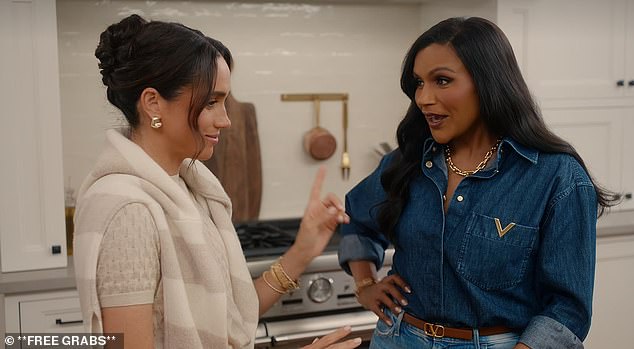
When Meghan recently insisted her surname was ‘Sussex’ on her Netflix show With Love, Meghan, the guest whom she’d awkwardly corrected wasn’t the only one left bewildered.
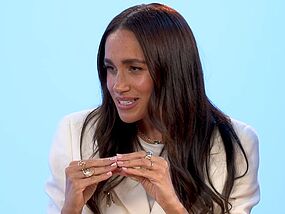
In episode two of the lifestyle series, which was released in March, the 43-year-old former actress was joined by her friend, actress and comedienne Mindy Kaling.
During a jokey conversation about fast food, Ms Kaling, 45, referred to the Duchess of Sussex as ‘Meghan Markle’. But – to Ms Kaling’s clear confusion – Meghan retorted: ‘It’s so funny you keep saying “Meghan Markle” – you know I’m Sussex now.’
Meghan, who has incidentally visited the English county of Sussex only once, continued: ‘You have kids and you go, “No, I share my name with my children”.
‘I didn’t know how meaningful it would be to me, but it just means so much to go, “This is our family name. Our little family name”.’
No doubt the reason that Ms Kaling looked so bewildered was that the duchess hadn’t been known to use the Sussex surname before. Indeed her two children, Archie and Lilibet, were both given the Royal Family’s surname, Mountbatten-Windsor, on their birth certificates.
Meghan’s show is, of course, not live but recorded and edited months before being streamed. So why did she choose to include this awkward and somewhat tetchy exchange in what’s supposed to be a feel-good programme?
Meghan ‘corrects’ her friend, actress and comedienne Mindy Kaling,saying: ‘You know I’m Sussex now’

Surnames ‘mean so much’ to the Duke of Sussex that he and his wife were desperate to ditch Mountbatten-Windsor
This week, I may have come close to revealing the answer.
In The Mail on Sunday, I disclosed that surnames ‘mean so much’ to the Duke of Sussex that he and his wife were desperate to ditch Mountbatten-Windsor. In an extraordinary example of that discomfort, Harry sought advice from Princess Diana’s brother about changing his family name to Spencer.
Sources said Prince Harry actively explored ways to assume his mother’s surname. It is understood he discussed the issue with Earl Spencer – whose family seat is Althorp in Northamptonshire – during a rare visit to Britain, but was told that the legal hurdles were insurmountable.
‘They had a very amicable conversation and Spencer advised him against taking such a step,’ a friend of Harry’s told me.
Now, I can reveal that this is the reason why Harry and Meghan have started using Sussex as a surname.
‘Harry accepted his uncle’s advice that using the Spencer name would be too complicated,’ the friend says. ‘He and Meghan are now using Sussex as their family name. Their children are Archie and Lili Sussex.’
Meghan’s decision to include the exchange with Ms Kaling on her show was seen as highly significant by royal sources after it was broadcast.
‘It’s clearly a warning shot,’ one Palace insider told me at the time.
They added that Meghan seemed to be making a very public point of emphasising how much the title meant to her and, by implication, to Harry. In other words, they suggested, it’s the clearest threat yet that the Royal Family should not even contemplate stripping the couple of their titles.
This is a course of action that has been mooted many times since Meghan and Harry abandoned royal duties five years ago, eventually moving to California to seek their fortune.

King Charles as a young man. He cherishes the Mountbatten name due to the influence of his great-uncle, the 1st Earl Mountbatten of Burma (right)
Royal sources have suggested this sanction is very much possible should the couple spark further controversy by publishing any more tell-all books about the Windsors – as Harry did with his 2023 memoir Spare – or agreeing to more explosive interviews – such as their sit-down with chat show host Oprah Winfrey in 2021.
But the fact that Harry consulted Earl Spencer over ditching the Mountbatten-Windsor name is one of the most toxic signs yet of the rift with his father and brother.
Mountbatten-Windsor is the surname available to descendants of the late Queen Elizabeth and Prince Philip. It combines the Royal Family’s name of Windsor and the Duke of Edinburgh’s adopted surname.
Philip took his maternal grandparents’ name Mountbatten when he became a British subject and renounced his Greek and Danish royal title in 1947. The Queen and Philip decided in 1960 that they would like their own direct descendants to be known as Mountbatten-Windsor.
King Charles cherishes the Mountbatten name – just as his father did – due to the influence of his great-uncle, the 1st Earl Mountbatten of Burma who was assassinated by the IRA in 1979.
As such, any move to ditch the name would be particularly hurtful to the King – with Harry and Meghan’s use of the Sussex name only raising the stakes in their ongoing battle with the Royal Family.
If the King, or his eventual successor Prince William, were to strip the couple of their titles, the Sussexes are making it clear that it would be seen as a declaration of war.